



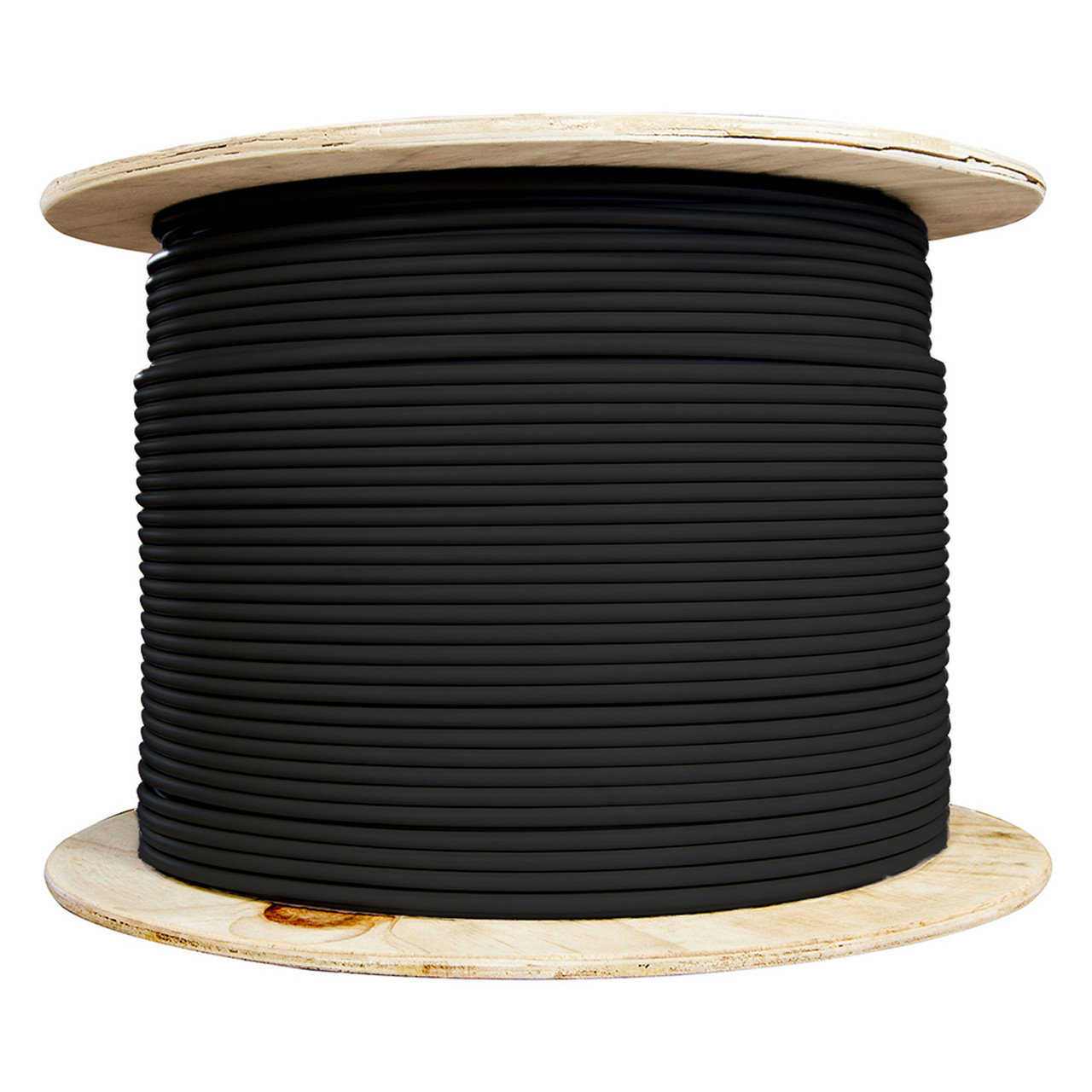
KVM CAT6 Cables
KVM CAT6 Cables provide network-style copper connectivity for compatible KVM extenders, switches, and distribution systems.
CAT6 cabling offers a convenient and widely available infrastructure for transmitting KVM signals between computers, equipment racks, and remote operator stations.
These cables are useful in data centers, control rooms, corporate facilities, classrooms, and professional AV installations where structured cabling is preferred.
Using compatible CAT6 cabling can simplify KVM system deployment while providing dependable connectivity for supported applications.
FAQs on KVM CAT6 Cables
What are KVM CAT6 Cables?
A: KVM CAT6 Cables are CAT6 connectivity products used to carry the signals required by professional KVM systems.
They provide the physical link between KVM equipment and endpoints, with exact capability determined by cable construction, connectors, bandwidth, and length.
What signals can KVM cables carry?
A: Signal capability depends on cable type and connectors and may include digital video, USB, keyboard, mouse, audio, or Ethernet traffic.
The cable should be selected for the complete signal path rather than only the connector shape.
Why is bandwidth important?
A: Cable bandwidth determines whether the link can reliably carry the required resolution, refresh rate, color format, and data signals.
Higher-bandwidth applications require cabling rated for the corresponding signal requirements.
Can KVM cables support high-resolution video?
A: Yes, compatible cables can support high-resolution video when their bandwidth and construction meet the required specification.
Verify resolution, refresh rate, color format, and cable length before deployment.
What is the advantage of fiber KVM cables?
A: Fiber optic KVM cables use optical transmission and can provide long-distance connectivity with immunity to electromagnetic interference.
They are useful in large facilities, broadcast environments, and control rooms where long reach or electrical isolation is important.
What is CAT6 used for in KVM?
A: CAT6 cabling is used by compatible KVM extenders, distribution systems, and IP-based KVM products.
Its standardized infrastructure and RJ45 connectivity can make it practical for professional installations.
Why use HDMI 2.1 cables for KVM?
A: HDMI 2.1 cables are designed for higher-bandwidth HDMI applications and can support modern high-resolution and high-refresh-rate formats when equipment supports them.
They are useful when a KVM system needs to preserve high-bandwidth HDMI signals.
How long can a KVM cable be?
A: Maximum reliable distance depends on cable type, bandwidth, construction, and connected equipment.
For longer runs, active optical cable, fiber, an extender, or network-based KVM may be more appropriate than passive copper.
How do I choose the correct cable?
A: Choose based on connector type, signal format, resolution, bandwidth, distance, and whether USB, audio, or control signals must also be transported.
Using cable that meets or exceeds the required specification helps reduce intermittent signal loss.
Where are KVM cables used?
A: KVM cables are used in server rooms, control rooms, broadcast facilities, production environments, enterprise workstations, and professional AV systems.
The appropriate cable type depends on the physical layout and signal requirements.